Next up in our Herb Garden How-To series: producing natural dyes! We’ve got a whole new round of plant-derived products in each of our baskets, seasonal to autumn; but today we’ll be looking at one of the most popular of dyes: henna.
A natural stain for the skin and hair, henna was used cosmetically for thousands of years, evident in many ancient cultures (from Egypt to the Roman Empire).
But henna also provides a rich, natural dye for fibers and textiles. That deep, orangey reddish-brown color is derived from the leaves of the Lawsonia inermis (also known as the henna tree), native to areas of Asia, Australia, and Africa. Its success in arid climates makes it a perfect fit for our temperate California weather—you can find our own henna tree soaking up the sun in the northeast corner of the Herb Garden.
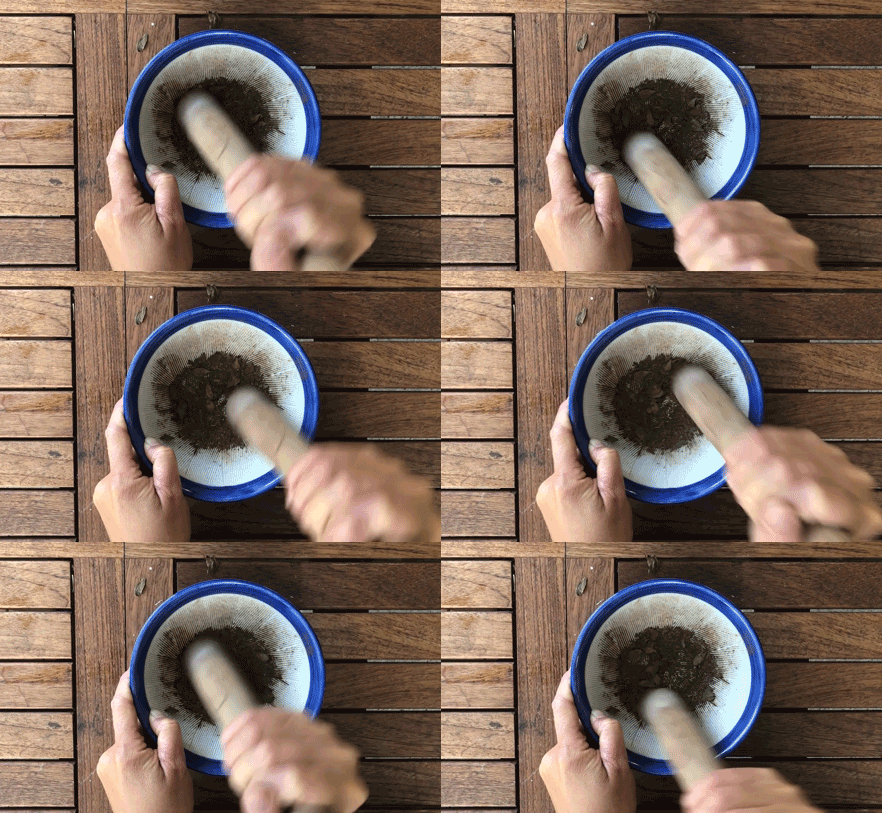
The first step to creating a natural dye from the henna tree is to harvest the leaves. The molecule lawsone is responsible for the pigment produced by the tree (hence the genus Lawsonia), and while the fresh leaves release the pigment when crushed, dried leaves produce the most saturated color. After allowing our harvested leaves to dry, we used a mortar and pestle to grind them into a fine, dark brown powder.
To activate the pigment, all you need is air and water. While you can let time do the work of saturating the water over a series of days, boiling the water and leaf particles together in the pot will extract the color more quickly. When the water looks about the color of coffee, grab a large jar, strainer, and coffee filter to remove any debris the from the mixture.
Once the dye has been completely strained, use your chosen fiber (wool is best for color adherence) and submerge within the jar. Depending on the richness of color you’d like, check the fabric after a day or two – it usually takes at least 24 hours for the dye to permeate the material.
Now, the really fun part of creating natural dyes – using it in knitting and weaving! Our Head Gardener of the Herb Garden, Kelly Fernandez, demonstrates how to spin the freshly dyed fibers into yarn, using a spinning wheel.
AND she’s already begun using the newly dyed henna yarn into her own weaving below.
Want to learn more about natural dyes and fiber arts? Go here
It’s the most wonderful time of the year!! The Guardian’s annual Bad Sex awards, or as I call them, “reasons men should be barred from writing sex scenes until we figure out what’s going on.”
Your mother died giving birth to you. Every woman dies in childbirth. If you have younger siblings, do not question how they got there. Truly, you do not want to know.
You have no ears, but delicate pink shells. Your teeth are pearls. Instead of hands you have small white paws. You are beautiful, and terrifying.
A handsome stranger has awakened something deep within your breast. You do not know what it is, but it is awake, and it is aware.
People keep dying of consumption. You cannot say as yet who is doing the consuming.
There is mist on the moor. There is always mist on the moor. Seasons have no meaning here.
Everyone outside of very specific parts of England is evil. This must be true. It must be, and that’s why you should never, ever leave. Ever.




 De Gene Zijde